Good living room lighting is built in three layers, not with a single chandelier: ceiling light for general illumination, task light for reading and work, and decorative light for atmosphere. The short answer: aim for 150–200 lumens per square metre, split that light across at least three sources and use the same light colour (2700–3000 K) in all of them.
1. How much light do you need?
Multiply the living room area in square metres by a number between 150 and 200. A 25 m² living room needs a total of 3,750–5,000 lumens. Stay near the upper end with dark walls and furniture, near the lower end in bright rooms with daylight. Share this total between the chandelier, wall sconces and floor lamps.
2. General light: chandelier or pendant
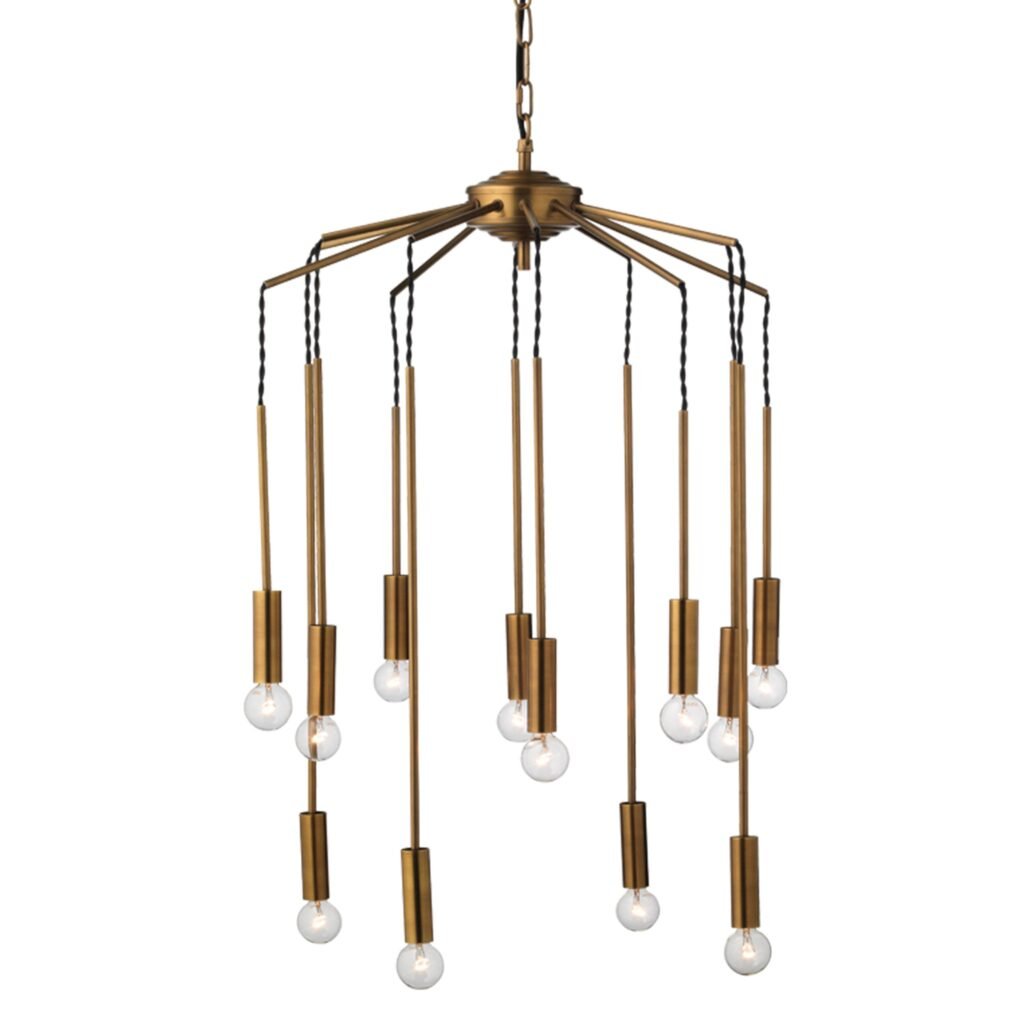
The ceiling light goes over the centre of the seating group or the room. You can work out its diameter from the sum of the room’s length and width; see our chandelier sizing guide and our article on choosing a pendant chandelier for the living room. Always connect the chandelier to a dimmer: full power by day and dimmed in the evening completely changes the mood of the room.
3. Task light: floor and table lamps
- Beside the reading chair, a floor lamp that lights from behind the shoulder; the bottom of the shade should sit slightly above eye level when seated. See our floor lamp guide.
- A table lamp on the side table next to the sofa; the bottom of the shade should be around the shoulder height of a seated person.
- A separate, adjustable light source for a work or hobby corner.
4. Decorative light: wall sconces
Wall sconces add depth to the walls and keep the room warm when the ceiling light is off. Mount them 150–170 cm from the floor, symmetrically on either side of the TV unit, fireplace or a painting. On long walls, sconces repeated every 2–3 metres create an orderly rhythm. Browse our wall sconces.
5. Control: switches and dimmers
Connect each layer to a separate switch or smart plug. That way you can create different scenes: only sconces and floor lamps in the evening, a single table lamp for a film, all layers on when guests arrive.
Common mistakes
- Expecting all the light from one chandelier: faces get shadowed and corners stay dark.
- Using bulbs with different Kelvin values; see our light colour guide.
- Choosing a chandelier that is too small or hangs too low for the room.
- Light sources reflecting directly on the TV screen.
Frequently asked questions
Does a living room need a chandelier? No; in low-ceilinged or modern living rooms, several wall sconces and floor lamps can provide enough light instead. In large living rooms, however, a chandelier becomes a focal point that pulls the space together.
How many wall sconces does a living room need? It depends on wall length; in most living rooms one sconce on either side of a focal wall, plus one every 2–3 metres on long walls, is enough.
Can you plan the lighting for our living room? Yes; send us your living room measurements and photos and we will prepare a suggestion and quote with chandelier, wall sconce and floor lamp options. You can find the designs on our chandeliers and pendants and floor lamps pages.