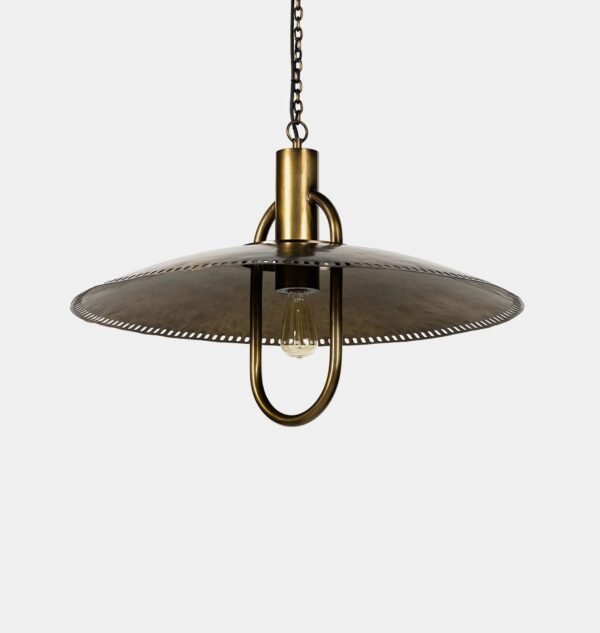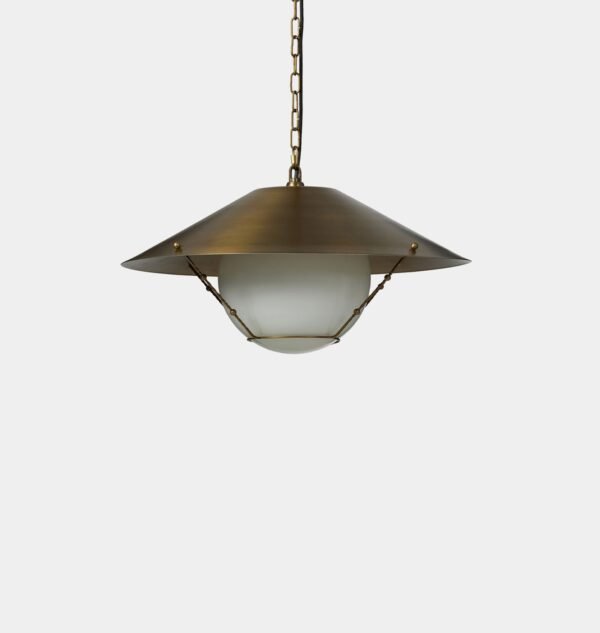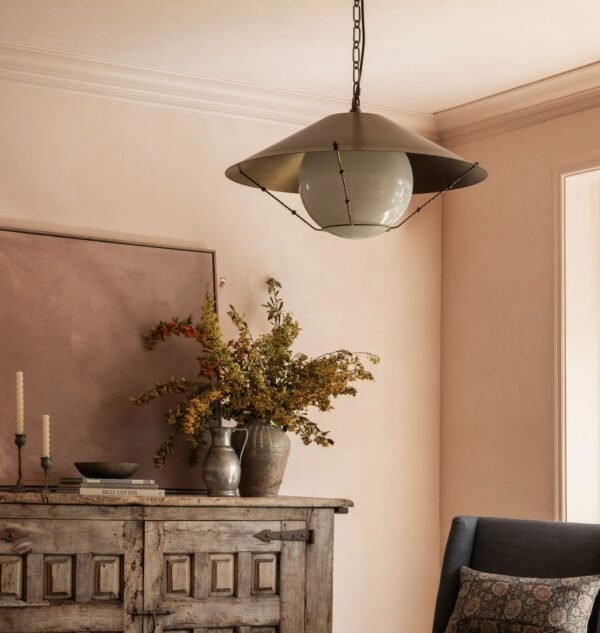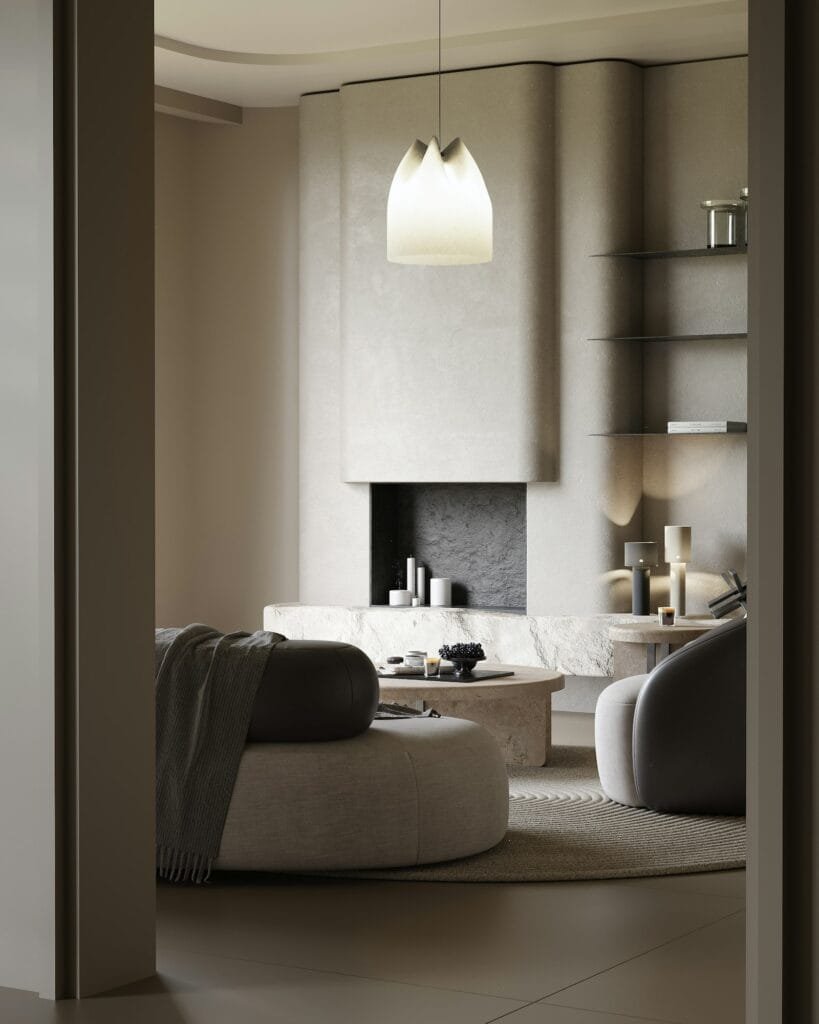
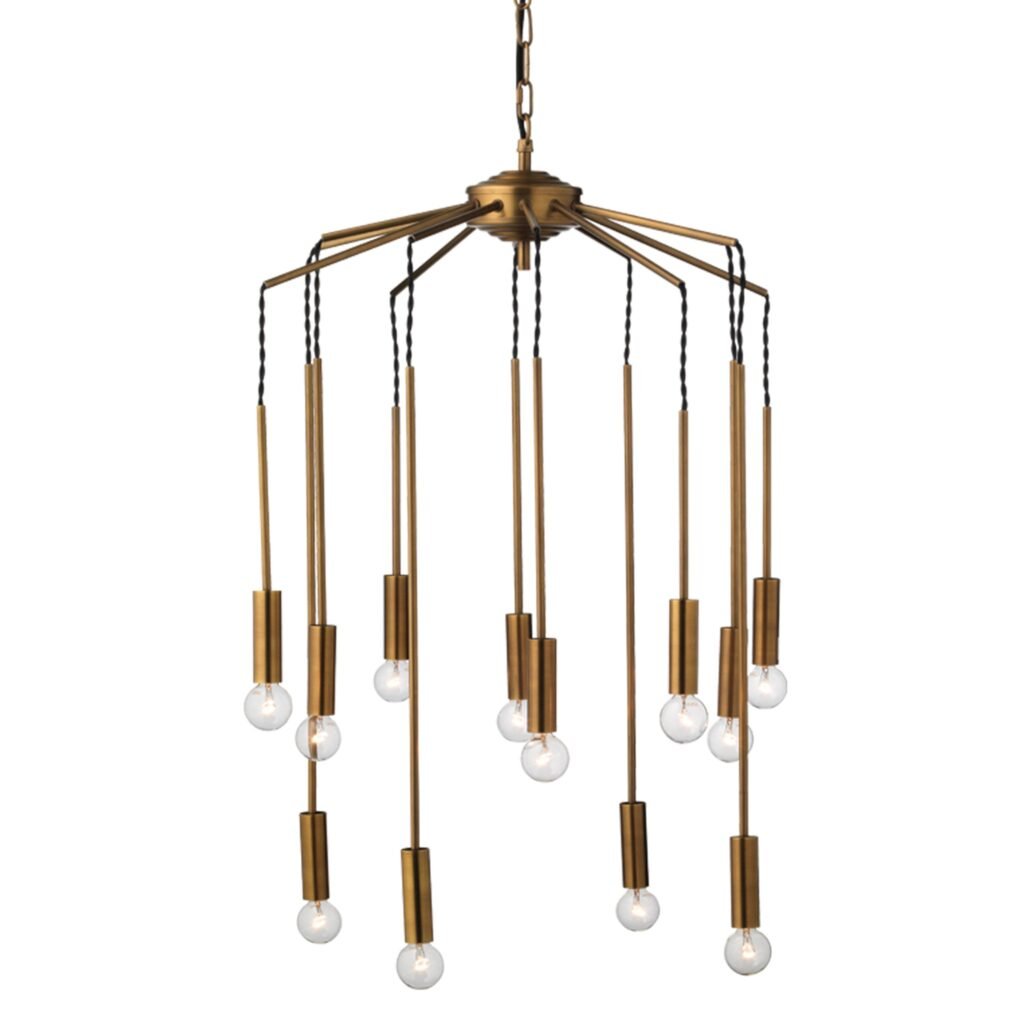
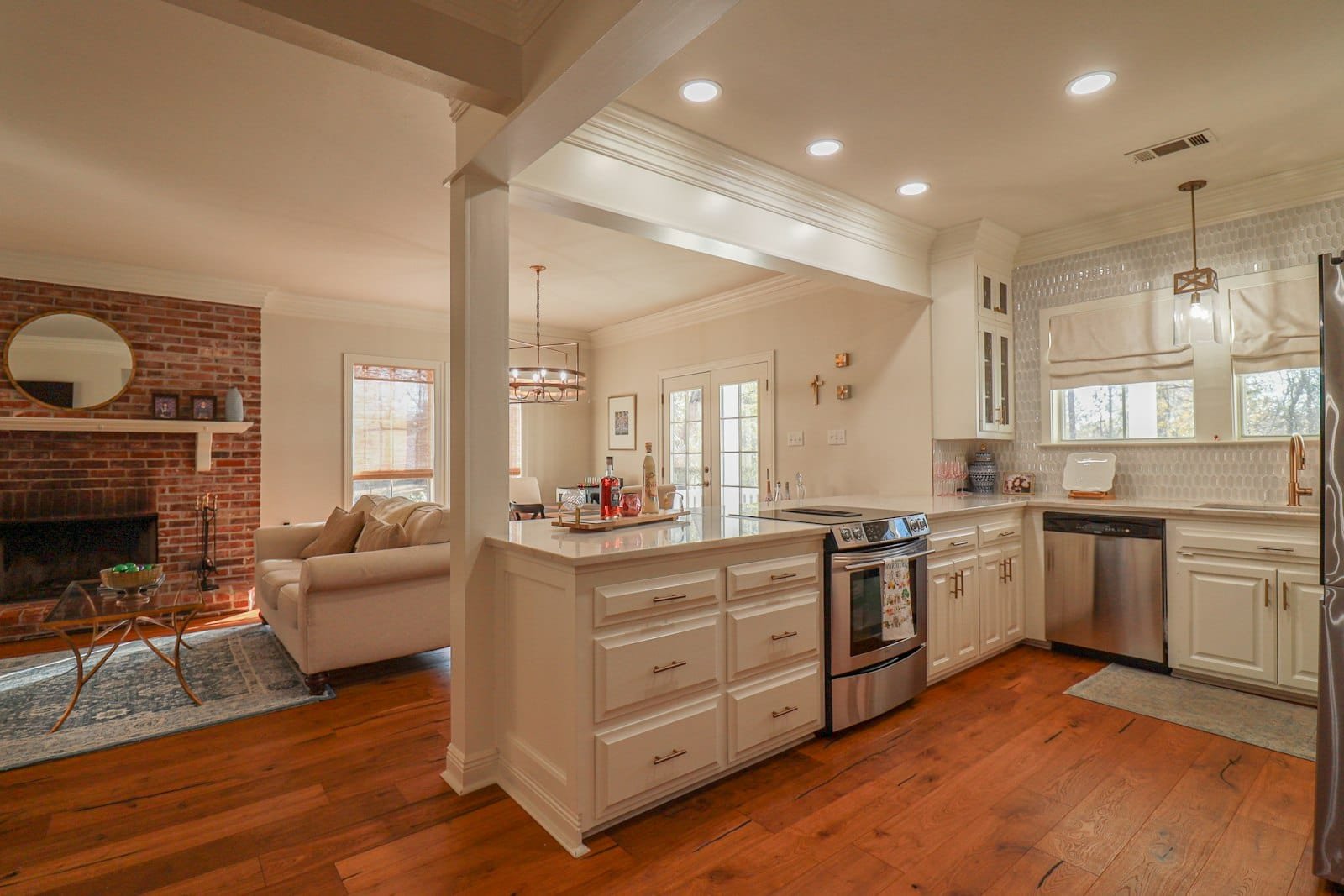
The right chandelier size comes down to three numbers: the room’s length and width, the ceiling height and what sits under the fixture (a walkway or a table). The short answer: add the room’s length and width in metres and multiply by 8; the result is the approximate chandelier diameter in centimetres. Each measurement is explained with examples below.
Chandelier diameter by room size
Formula: (room length + width, metres) × 8 ≈ chandelier diameter (cm). In a 4 × 5 metre living room, 4 + 5 = 9 and 9 × 8 = 72 cm, so a chandelier of about 72 cm looks balanced. Treat this as a starting point: go one size up for slim, airy designs and one size down for dense, voluminous ones.
- 3 × 3 m room (bedroom, study): about 45–50 cm
- 4 × 4 m room: about 60–65 cm
- 4 × 5 m living room: about 70–75 cm
- 5 × 6 m living room or larger: 85 cm or more, or two separate chandeliers
Chandelier height by ceiling height
For the body height of the chandelier (excluding chain or rod), allow 20–25 cm for every metre of ceiling height. A 2.70 m ceiling suits a body of 54–68 cm, a 3 m ceiling 60–75 cm. With low ceilings (2.50 m or less), choose flatter designs mounted close to the ceiling.
How low should a chandelier hang?
Over a walkway, the lowest point of the chandelier should be at least 210 cm above the floor so nobody hits it and the light spreads evenly. In double-height living rooms and stairwells the fixture can be lowered towards the middle of the space while keeping this clearance.
Chandelier size over a dining table
Over a table, the table sets the size, not the room. The diameter should be between half and two thirds of the table width and stay at least 30 cm inside each edge. Hang the bottom of the chandelier 75–90 cm above the table top. For long tables, two or three pendants or a linear design give more even light than one large chandelier. See our dining table and kitchen island lighting guide for details.
Beyond the measurements
- Light output: aim for about 150–200 lumens per square metre in a living room; if the chandelier alone is not enough, add wall sconces and floor lamps.
- Dimmer: adjustable light lets you use a large chandelier differently by day and in the evening.
- Weight: have the load capacity of the ceiling fixing checked before installing large brass and metal chandeliers.
- Visual weight: glass and open designs look lighter at the same diameter.
Frequently asked questions
What happens if the chandelier is too big? The room looks smaller and crowded, and the light can feel glaring. When you are between two sizes, the smaller one is usually the safer choice.
Should the chandelier be exactly in the centre of a rectangular room? Hanging it over the centre of the seating group or table usually works better; if the room centre and the furniture centre differ, follow the furniture.
Can I order a chandelier in custom dimensions? For most designs made in our workshop we can offer size and material options. Browse our chandeliers and pendants and send us the code of the piece you like; we will reply with a suggestion and a quote for your measurements.